Playing Freely and Enjoying the Process

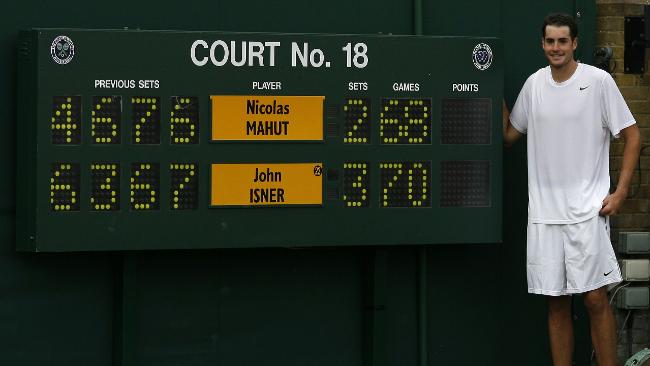
isner-mahut-wimbledonscore
Photo: Glyn Kirk/AFP via Herald Sun

by Angelo A. Rossetti, USPTA Elite/PTR Professional, USTA HP & Mental Skills Certified & 2x Guinness World Records™ holder 

The thing about competitive tennis  and all sports is just that – it is “competitive.” And where there is competition there is the dreaded score keeping. Score keeping by definition means there will be a “winner” and a “loser.” This adds to the pressure and therefore the nerves. The issue with the complex score keeping of tennis is the fact that each game has a beginning and an ending. The score is not cumulative like soccer, football or basketball. You win points in an effort to try to win games. The cumulative count of games helps you close out a set but the match isn’t over. It doesn’t matter how even or lopsided the score is after the first set – if you won it you are up a set, if you lost it you are down a set. The margin of victory or defeat by set is irrelevant in regards to the score. Learning how to play freely, without being paralyzed by the score is so important to success in tennis. What holds tennis players back is thinking about the past score or the future score rather than focusing on the moment at hand. If you just lost the first set 6-0 or you lost it 7-6 you are only down a set. The score of that set is irrelevant to the point at hand. Playing freely may mean assertively or aggressively to some and consistently or patiently to others. It means to lose yourself in the moment, relaxing, having confidence to know that you can hit your shots to the best of your ability while enjoying every moment. It sounds easy to say but it can be difficult to do.

 
How can you play freely? Care enough not to care. The match is important but not that important. You will have other opportunities. It’s really not as important as you think. Those who shrug off the importance too much are just escaping the pressure. Find your rhythm – find your flow – find your zone. Once you do, play don’t think. Hit don’t overthink. Just do what you know how to do and let the result handle itself. The thing is that once we get closer to the end we tend to dwell on the end without finishing each point. The human mind is unable to think about more than one thing at a time. So if you are thinking about holding the trophy if you are ahead at the end of the match or what your friends, coach or teammates will think if you lose if you are behind in a match, then you are unable to focus effectively on the task at hand, which is the ball and each shot within each point.
 
 
There have been some moments in professional tennis (i.e. Venus Williams against Karolina Sprem at the 2004 Wimbledon and Roger Federer in 2014 at Halle on grass against Kei Nishikori) where a player has actually forgotten the score. Is this a good thing or a bad thing? My contention is that although on the surface it means the player isn’t engaged or focused enough because the player was unable to remember the score it actually means that the player is so absorbed in finding the flow or zone that the score becomes less critical and the process becomes more top of mind. Does this mean that the score doesn’t matter? No. The score is an important factor in selecting tactics. If you are up you may play percentage tennis or in basketball terms “trade baskets” and if you are down you may play more assertively to change momentum. With that said, a general awareness of the score is important but it shouldn’t be a “paralysis of analysis”. Think between the points and take action during them. Your mind sets the game plan for each point and your body executes it.


In regards to enjoying the process, statistically speaking if you play an opponent who is at your level then you can expect to win 50% of the time. With that said, it means that if you pin your enjoyment to only receiving a “W” with the outcome then you will be disappointed half of the time. If however, you play YOUR game, focusing on “controlling the controllables” you are more apt to enjoy the process, play better tennis and ultimately achieve much more favorable results. Holding your enjoyment of tennis hostage unless you win is a good way to hold back your tennis potential and enjoyment of the game.


I always welcome feedback at angeloarossetti @ gmail .com.

You can learn more about a couple of tennis GUINNESS WORLD RECORDS™ that I have been a part of:

FOX News Story
Inspirational Tennis Story: Tennis Begins with Love
If you found this article of value please consider making a donation to Save the Children. Otherwise, please share this article so that we can educate, inform and inspire others.
Make a Donation

If you are interested in my new book TENNACITY: The Tenacious Mindset On & Off the Court, please complete the form below.

Go back

Your message has been sent

Warning
Warning

Warning.

google-site-verification: google43e4b9f09f62804e.html

Playing Freely and Enjoying the Process

The Most Effective Way to Use Visualization

Carli-Lloyd-Word-Artby Angelo A. Rossetti, USPTA Elite/PTR Professional, USTA HP & Mental Skills Certified & 2x Guinness World Records™ holder 

Although the term “visualization” is commonly used among top athletes not everyone understands it or does it correctly.

According to the book tennis science, how player and racket work together, the definition of visualization is “The act of imagining an outcome or result of an action – such as the placing of a shot, the execution of a particular move, or even the result of a match. Visualizing a successful outcome is a psychological tool for bolstering confidence and improving performance.”

Try this exercise. Imagine yourself playing tennis or any sport. Visualize you doing what you do best. Now, take a moment and think about whether you “see yourself performing” the action like it was on video or TV or do you “see yourself through your own eyes”.

Carli Lloyd once shared at a recent mental toughness conference that she’d “spend time in my room with my headphones on visualizing.” “I’d actually visualized that we were down (in the World Cup finals) … 2-0 and I came in and scored the winning goal. Ever since that moment I’ve been visualizing.” She ended up not only scoring the winning goal in the World Cup final but also securing a hat trick of 3 goals, scoring the first 2 goals and her third goal from midfield. If one of the world’s best soccer players and athletes prioritizes visualization so much, it’s something that you should adopt as part of your training as well.

If you are using visualization by seeing yourself doing it and not through your own eyes then you are limiting the power of imagery because you are only using the visual sense rather than all five of our primary senses: sight, smell, taste, touch and hearing. (There are more senses, however, that involve the use of multiple sensory organs like awareness of balance (equilibrioception), pressure, temperature (thermoception), pain (nociception), and motion.) It is much more effective to use imagery as if you are performing a task through your own eyes because you utilize all of your senses. You can smell the fresh fuzz of a new can of tennis balls, you can feel the smooth grip of your handle, you can sense your mouth salivating on that easy overhead smash as you hear yourself make solid contact. You get where I’m going with this. If you train yourself to visualize by using all of your senses then your results will be much more effective.

Put yourself in the moment rather than watching yourself in the moment. Be a participant with your visualization not a spectator. Most people stifle their results by conducting visualization incorrectly. Make sure to use imagery the right way to optimize your results.

Additional reading: tennis science – how player and racket work together, edited by Machar Reid, Bruce Elliott & Miguel Crespo

I always welcome feedback at angeloarossetti @ gmail .com.

You can learn more about a couple of tennis GUINNESS WORLD RECORDS™ that I have been a part of:

FOX News Story
Inspirational Tennis Story: Tennis Begins with Love
If you found this article of value please consider making a donation to Save the Children. Otherwise, please share this article so that we can educate, inform and inspire others.
Make a Donation

If you are interested in my new book TENNACITY: The Tenacious Mindset On & Off the Court, please complete the form below.

Go back

Your message has been sent

Warning
Warning

Warning.

google-site-verification: google43e4b9f09f62804e.html
The Most Effective Way to Use Visualization

Confidence vs. Winning

Soccer: Women's World Cup-Final-Japan at United States
Jul 5, 2015; Vancouver, British Columbia, CAN; United States midfielder Carli Lloyd (10) reacts after scoring a goal against Japan in the first half of the final of the FIFA 2015 Women’s World Cup at BC Place Stadium. Mandatory Credit: Anne-Marie Sorvin-USA TODAY Sports

by Angelo A. Rossetti, USPTA Elite/PTR Professional, USTA HP & Mental Skills Certified & 2x Guinness World Records™ holder 

The chicken or the egg causality dilemma certainly applies to tennis, and all sports for that matter, as it relates to confidence and winning.

You can say that winning leads to confidence but without some form of confidence it’s very difficult to win.

That’s why when an athlete wins their first match, a Grand Slam (like Angelique Kerber at the 2016 Australian Open) or tournament their celebration is an explosion of emotion. It’s a combination of surprise, disbelief and relief. When I heard Team USA’s soccer player Carli Lloyd speak, 2015 FIFA Women’s World Player of the Year, she said that she imagined scoring three goals in the 2015 World Cup finals the night before. When the first goal happened she was surprised, when the second goal happened she was excited and when her third goal happened she wasn’t surprised just happy that she did what she had imagined she would do.

The thing is that although winning does create confidence you don’t have to win first. This is where imagery comes in.

The best athletes use imagery as a way to bolster confidence.

Some people confuse imagery with visualization. Visualization is primarily when you use just your “vision,” whereas imagery you use all of your senses. Done correctly, it puts you in the eyes of the person accomplishing the task or goal rather than seeing yourself do something like watching yourself on television. Putting yourself doing it is more effective. To use an example, when my brother and I set the Guinness World Records™ Title for the longest tennis rally in August of 2008, we had never held a world record, although we tried and failed in 2007 when set the U.S. record. We wrote a press release of what the headlines and story would be the day after our world record. We put it our achievement into words and started to imagine actually setting the record before it actually happened. By writing it and by reading it you start to believe that you will actually accomplish it. We used imagery to build confidence and belief without having actually done it before.

You can break it down into small pieces of confidence. Confidence can be gained from small successes not just from the overall winning. If you are serving big, returning the way you want, attacking or executing your game plan, improving on a weakness or building up a strength, these are small steps to achieving confidence. Rather than allow yourself the confidence only when you win, you need to allow yourself to gain confidence with other things besides winning. You can’t think about the end during the match but focus on the process.

Another way to use imagery is to imagine failure in order to come up with solutions to deal with failure. The world’s best athletes use imagery to experience failure so they don’t have to actually fail to practice the right mindset to deal with not performing well. When you lose your cool you can use imagery to deal with how you would handle losing your cool. What would your thought process be to remove yourself from these negative thoughts and emotions and how will you respond.

Confidence is the degree of certainty that players have in their ability to be successful in executing a skill or series of tasks, which is proven to be one of the best predictors of competition success. (tennis science – how player and racket work together; edited by Machar Reid, Bruce Elliott & Miguel Crespo)

Use imagery to rehearse the good and the bad in order to bolster confidence and belief rather than waiting to win to improve your confidence.

Your past success gives you the confidence that you can. Your past failure gives the humbleness that you can’t. However, if you believe you will.
-Angelo A. Rossetti, 1-26-13

Additional reading: tennis science – how player and racket work together, edited by Machar Reid, Bruce Elliott & Miguel Crespo

I always welcome feedback at angeloarossetti @ gmail .com.

You can learn more about a couple of tennis GUINNESS WORLD RECORDS™ that I have been a part of:

FOX News Story
Inspirational Tennis Story: Tennis Begins with Love
If you found this article of value please consider making a donation to Save the Children. Otherwise, please share this article so that we can educate, inform and inspire others.
Make a Donation

If you are interested in my new book TENNACITY: The Tenacious Mindset On & Off the Court, please complete the form below.

Go back

Your message has been sent

Warning
Warning

Warning.

google-site-verification: google43e4b9f09f62804e.html

Confidence vs. Winning

Focus On Only ONE Thing

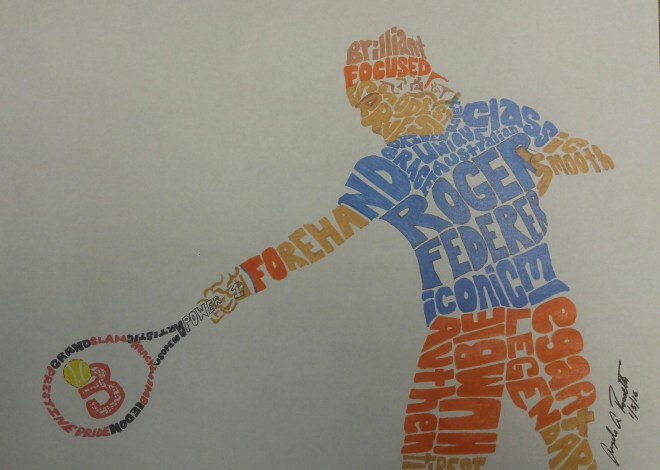
RogerFederer-ForehandWordArt

by Angelo A. Rossetti, USPTA Elite/PTR Professional, USTA HP & Mental Skills Certified & 2x Guinness World Records™ holder 

I find that most tennis players try to accomplish more than one thing at a time when playing a match. They try to focus on winning but also hitting a more consistent serve or having a positive attitude and being more assertive or taking more risks but improving consistency. The problem is that the mind can only focus on one thing at a time. We loosely say that we want to multitask in today’s society but multitasking isn’t what people think it is. Multitasking originally from a computer dealing with several different processes but the key is that it was only one at a time, contrary to what most people think. The phrase is misleading because it has been misused. Even computers can only deal with one item at a time.

Although our bodies can physically do two things at once (i.e. walking and chewing gum), we cannot FOCUS on more than one thing at a time with our minds. Our attention shifts from one task to another. We “think” we can so therefore we think we “should.” Recovering from your distractions in a tennis match can take several points. Case in point is when you see a professional tennis player complain about a bad line call. More often than not they are distracted by their emotional outburst that they lose the next point. John McEnroe was probably the only player that I know of who was able to get fired up and play better under circumstances where negative emotions surface. Considering that we average as many as 12,000 to 50,000 thoughts per day according to the National Science Foundation, and that they can change every few seconds, we would have hundreds of things to focus on in a full tennis match with many opportunities to shift thoughts and become distracted from our ONE thing.

If your intention is to do many things with mediocrity then multitasking is for you. But if you want to do ONE thing really well, then you need to have the self-discipline to focus on only ONE thing. Now the most important part of this concept is selecting the “right” thing for you to focus on. The right thing would be the thing that would lead you to victory the most often or the one thing that you need to improve the most. It’s more about selecting the right thing to do right, rather than doing everything right.

When I competed in the past I would carry an index card in my tennis bag of the 10 things that I was working on improving going into tournaments. Some of them were Positive Attitude, Relax, Be Aggressive and Have Fun/Be Happy. Then, before each match, I would narrow them down by circling the top 3 that were most important or most timely. After the warmup, I would narrow that down even further to just ONE thing. Now the trick is to convince yourself that only one thing would be good to propel you to play your best. Some estimate that upwards of 70% of our daily thoughts are negative, so having a positive mental attitude is critical for positive results in athletics.

Playing one particular nationally ranked opponent I had to focus on “letting go” any anger from poor line calls, bullying and out-right cheating. I learned from the past that if I lost my composure, I lost my game and I lost the match. Focusing on this one thing worked as I defeated him the finals in straight sets without being broken once I committed to focusing on ONE thing.

Your mind is like your eyes. If you place two items in front of you and try to focus on both at the same time it’s not possible. But if you focus on one item you can still be “aware” of the other item. That means that when you are playing a tennis match you should have one primary factor to focus on and several factors in your peripheral vision like the opponent’s weakness, what direction the wind is blowing, if the opponent has a one-handed or two-handed backhand, and so on. But if you try to focus on all of those things at the same time you won’t be able to focus on your primary game plan.

As a practical matter, what you select to focus on can be counterintuitive. There are three types of tennis players: players at your level, players above your level and players lower than your level. When playing an opponent at your level you need to focus on patience or playing smart. When playing an opponent above your level you need to play aggressive or take risks. Finally, when playing an opponent lower than you level you need to play consistently or counter punch.

Focusing on more than one thing is like texting and driving at the same time. You become comfortable with the driving part of it but the texting distraction can have hazardous results. With the new technology upon us of cars driving themselves it is projected to reduced car accidents by 80%. This is because the car’s computer will only focus on one thing at a time and won’t get distracted like us human beings do.

Look at it this way: have you ever seen a tennis play win a match and hold up the #2 sign or #3 sign when winning? I’ve just seen #1! Remember to focus on ONE thing and you will be holding up #1.

Additional reading: The ONE Thing: The Surprisingly Simple Truth Behind Extraordinary Results, Gary W. Keller, Jay Papasan

I always welcome feedback at angeloarossetti @ gmail .com.

You can learn more about a couple of tennis GUINNESS WORLD RECORDS™ that I have been a part of:

FOX News Story
Inspirational Tennis Story: Tennis Begins with Love
If you found this article of value please consider making a donation to Save the Children. Otherwise, please share this article so that we can educate, inform and inspire others.
Make a Donation

If you are interested in my new book TENNACITY: The Tenacious Mindset On & Off the Court, please complete the form below.

Go back

Your message has been sent

Warning
Warning

Warning.

google-site-verification: google43e4b9f09f62804e.html

Focus On Only ONE Thing

Playing with Purpose

RogerFederer-originalartworkby(C)AngeloARossetti-2015by Angelo A. Rossetti, USPTA Elite/PTR Professional, USTA HP & Mental Skills Certified & 2x Guinness World Records™ holder 

Average Rally Length
In analyzing tennis statistics over the past several years, I’ve realized that most rallies on the ATP and WTA pro tour average 4 shots or less, even on slower surfaces like clay. Ironically, as a tennis teaching professional, we have stressed consistency, movement to get to more balls and to extend rallies, basically outlasting your opponent. But looking at these numbers would tell a different story as it relates to strategy.

It has less to do with consistency and more to do with who is brave enough to take a risk or strike first. Play each and every shot with purpose. Consider playing each shot as a set up shot. In other words, thought and care need to be put into every shot starting with the first serve and the return of serve. The mentality of “just get the return back” or “don’t double fault, just get the serve in” is no longer effective at most levels.

Making every shot a set up shot is relative. If a beginning player has a weak serve, then just getting the serve in might be the best strategy based on his or her level. But once a player has command over most shots then gearing towards setting up points become critical. In other words, the earlier you can set up the point to close it out, the more of a positive outcome is in store.

First Strike Tennis
Now, am I saying that you have to go for a winner on every shot? No, not at all. Quite the contrary, what I am saying is that you need to play a new form of “percentage tennis. “ Playing “consistently aggressive”, “aggressively consistent”, “drawing first blood” or it is known in tennis circles as “first strike tennis.” 0 to 5 shots can be considered first strike tennis, 5 to 10 shots can be considered playing patterns or above 10 shots is consistent play. Although there are some rallies that last 20 shots, these are becoming fewer and further between. Looking at data from three matches, Australian Open 2010 semi-final between Serena Williams and Li Na, 2009 French Open Round of 16 between Robin Söderling and Rafael Nadal and the 2007 ATP Men’s Singles Final between David Nalbandian and Rafael Nadal, the average rally lengths were all below 6 shots; 4.2, 5.7 and 5.4 average rally lengths respectively. The longest rally was not more than 20 shots for each of these matches except the match on clay, which was 25. (source: Tennis Patterns: Player, Match and Beyond by Vis, Kosters and Terroba http://liacs.leidenuniv.nl/~kosterswa/tennisbnaic2010.pdf)

So why is that? The game is becoming more of a power and athletic contest and because of that you don’t have the luxury as a player to just get your serve in or block your return back. You have to have purpose not only behind your serve but your serve +1 or second shot needs to be premeditated as well. The returns need to be pre-selected and pre-planned as well, with the optimal return being deep to the server’s feet which give that person less reaction time and the sharp angle and down the line shots being the more risky or change-ups shots. On the serve you are typically looking to “serve out wide and hit to the other side.” This happens to be one of Roger Federer’s most used patterns on his serve. Serving to the body or the T are best used as change ups, at least in singles. There is a difference between doubles and singles, where doubles is won up the middle, while singles down the line tends to be the first strike shot of preference.

With all of that said, playing with purpose means to play each shot with the next shot in mind. Every shot needs to be handled with TLC (tender loving care) and have the next shot in mind. There is no luxury anymore in biding your time waiting for a short ball that may never come. I’ve found that the more skillful the players, the average rally length goes down and the less skillful the players the average rally length goes up. That’s because each player doesn’t have enough weapons or confidence to end the point sooner. The average rally length on the tour isn’t so low because there is more serving and volleying but on the contrary the return game has become much better as well as the serve that they are both used as set up shots. Some people have the notion that I am going to “grip it and rip it” and try to go for winners and that that makes tennis more enjoyable and that might be true for the male species. Each shot should be a set up to shot to close out the point in one or more than one shot. So that out wide serve to the deuce side happens to set up your next shot to the open court rather than the serve itself ending the point.

Winners
Winners should just happen organically but not necessarily planned. Don’t go for an ace but rather hit an aggressive serve out wide to set up the second shot (serve +1) shot to the “other side.” If your serve is hit strong enough, placed well enough or your opponent guesses wrong it can turn into an ace or service winner but that was a pleasant surprise rather than the expected outcome.

“Win the point with your set up shot not your last shot in the rally.” This is counter to common sense, which says that the last shot “wins” the point. But in actuality, the more effective way to define winning the point is being the first to take a risk, draw first blood – which is commonly known as “first strike tennis.” Whoever makes the most effective first strike (makes the set up shot) will more often than not win the point. The phrase “first strike” comes from the fact that you are the first one to throw a punch, the first one to play an aggressive shot, the first one to take a risk, the first one to hit closer to the lines, the first one to hit with more power or you are the first one to hit deeper. So, play with purpose, create a set up shot with every one of your shots and you’ll be able to close out more points and more matches.

I always welcome feedback at angeloarossetti @ gmail .com.

You can learn more about a couple of tennis GUINNESS WORLD RECORDS™ that I have been a part of:

FOX News Story
Inspirational Tennis Story: Tennis Begins with Love
If you found this article of value please consider making a donation to Save the Children. Otherwise, please share this article so that we can educate, inform and inspire others.
Make a Donation

If you are interested in my new book TENNACITY: The Tenacious Mindset On & Off the Court, please complete the form below.

Go back

Your message has been sent

Warning
Warning

Warning.

google-site-verification: google43e4b9f09f62804e.html

Playing with Purpose

The Two Types of Confidence

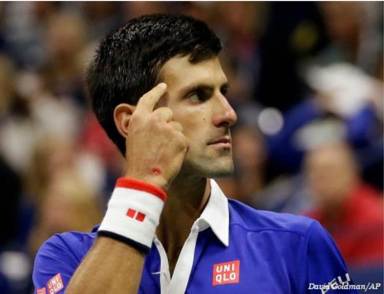
novak-djokovic

by Angelo A. Rossetti, USPTA Elite/PTR Professional, USTA HP & Mental Skills Certified & 2x Guinness World Records™ holder 

 
After reading my friend and colleague Dr. Allen Fox’s article on confidence, where he used Nadal’s recent dip in confidence as an example, I was inspired to share my perspective on the subject.
 
I agree there are two types of confidence. Let’s identify them as follows:

Static and Dynamic Confidence.

Static Confidence is the confidence that is in-born, it’s similar to your personality type. Although this confidence can vary it typically doesn’t vary by much. For example, some people are Type A personality, they are outgoing or good at public speaking.Others have to take public speaking classes to be able to speak well in front of groups or be more assertive. If you aren’t born with high static confidence that’s OK because it can be worked on and learned just like good movement in tennis. If you read a powerful book, see an inspiring tennis match or have a person important in your life believe in you and tell you right before a match “make me proud” or “you can do it,” these are ways to increase your Static Confidence. Usually these methods don’t last too long and take work. Going to workshops or seminars, reading ebooks or listening to pod casts are other examples.They are like a boost of adrenaline; powerful when used but don’t last very long. They are more innate and knowledge based.
 
Dynamic Confidence is the confidence that is typically based on your own success in what you are confident in or accomplished at. In tennis, the more you win matches the higher your Dynamic Confidence. In my opinion the turning point in Novak Djokovic’s career was the first time that Roger Federer had match point against him at the 2011 U.S. Open and he hit a phenomenal forehand return of serve winner en route to winning the final that year. It was the right shot at the right time. He played “freely”. He took a calculated risk with a “nothing to lose everything to gain” attitude. This type of play has been with him ever since. Djokovic currently plays the important points better than anyone – knowing when to play percentage tennis and knowing when to take risks. Nadal’s example would be his down the line backhand passing shot winner in the epic 5-set match against Federer at the 2008 Wimbledon final. Nadal ended up defeating Federer 6–4, 6–4, 6–7(5–7), 6–7(8–10), 9–7. That match is regarded as one of the best matches in history. Up until recently, Nadal’s dynamic confidence has been just as high, especially on clay.
 
The question then is like the chicken or the egg. How do you develop or increase Dynamic Confidence if it’s based upon winning? If you haven’t won or don’t win enough how do you increase it? The trick is knowing what you can control and what you can’t control. I typical share the definition of frustration as the difference between expectations and performance. Most athletes think they can control their performance at will but just like “being in the zone” or “finding flow,” it doesn’t happen on cue, an athlete’s performance can’t be controlled on cue. This means that the player needs to lower his or her expectations in order to reduce the chance of frustration during a match. By lowering your expectations your performance will be perceived to be increased. You are almost surprised when you hit solid shots and make good decisions. This then leads to greater dynamic confidence.
 
Once we become aware of the different types of confidence and how we can influence them, we become better athletes under pressure and will enjoy the game more.

If you would like to read more on the subject I suggest Dr. Allen Fox’s book Tennis: Winning the Mental Match
 

I always welcome feedback at angeloarossetti @ gmail .com.

You can learn more about a couple of tennis GUINNESS WORLD RECORDS™ that I have been a part of:

 
If you found this article of value please consider making a donation to Save the Children. Otherwise, please share this article so that we can educate, inform and inspire others.

If you are interested in my new book TENNACITY: The Tenacious Mindset On & Off the Court, please complete the form below.

Go back

Your message has been sent

Warning
Warning

Warning.

google-site-verification: google43e4b9f09f62804e.html

The Two Types of Confidence