Be the Best Version of Yourself

rogercrawford-trophyRoger Crawford carrying the Olympic torch (left courtesy Roger Crawford). The trophy my father gave to my brother & me when trying to set our first Guinness World Record in 2007 flanked by the two books that highlighted our records.

In sports and in life you need to celebrate your small successes. Each improvement, no matter how small, will increase your confidence. Unfortunately in our society we compare ourselves to others in order to judge how we are doing ourselves. It’s easy to do. In school we received grades. Those can easily be compared to other children. In sports there is a winner and a loser. In life there is your neighbor’s house, lawn and car.

If we let it, comparison can consume us. STOP. Adjust your mindset so that you are comparing yourself to yourself. You want to be the best version of yourself that you can possibly be. Compare yourself to ONLY yourself. Now self-improvement can be like a good stock in the stock market. There are days it can go up, be level and go down but all in all, just like a good stock, it improves over time. Sometimes the changes are subtle but the subtle improvements, especially among athletes, are the most important and challenging ones because they often go unnoticed by you. Turn your set backs into comebacks and be resilient when faced with adversity just like Roger Crawford says in his book How High Can You Bounce? Think of it this way. The US Army’s slogan is “Be the Best You Can Be.” It’s not ‘Be better than everyone else’. Nike’s slogan is “Just Do it” and not ‘Just Win it’.

Comparison to others will just foster jealousy, envy and self-dissatisfaction whereas comparison to ourselves is the best thing you can do to foster introspection, improvement and success. Look at the world’s top athletes or world record holders. If you are already the best at something then comparing yourself to others will only be a path downward. However, creating a mindset whereby practice today has the sole focus of being slightly better, stronger or faster than you were yesterday will lead you on an upward path of becoming a champion.

Sometimes in life you are the silent champion with no one knowing how much you’ve improved so make sure to give yourself a good medal.

I always welcome feedback at angeloarossetti @ gmail .com.

You can learn more about a couple of tennis GUINNESS WORLD RECORDS™ that I have been a part of:

Our Inspiration – 2 World Records 2 Minute Video
FOX News Story
Inspirational Tennis Story: Tennis Begins with Love
If you found this article of value please consider making a donation to Save the Children. Otherwise, please share this article so that we can educate, inform and inspire others.
Make a Donation

If you are interested in my new book TENNACITY: The Tenacious Mindset On & Off the Court, please complete the form below.

Go back

Your message has been sent

Warning
Warning

Warning.

Be the Best Version of Yourself

The Four Types of Strength


word-cloud-mental-strengthblog

Blog article by Angelo A. Rossetti, USPTA Elite/PTR Professional, USTA HP & Mental Skills Certified & 2X Guinness World Records™ holder

Mental toughness is often incorrectly used interchangeably with resilience. Psychologists define resilience as a positive adaptive process of coping with adversity and stress, as opposed to a group of personality traits or psychological attributes. In other words, mentally tough describes someone’s personality but resilience is a process to handle situations.

In her second TED talk, Jane McGonigal discusses four types of strength in the form of resilience: Physical, Mental, Emotional and Social.

Strength in sports comes in forms that may surprise you. The four types of strength are:1. Physical resilience, 2. Mental resilience, 3. Emotional resilience, and 4. Social resilience.

Physical Resilience is the most obvious and most commonly known form of strength. Being able to resist force. Being malleable to flex with stress and pressure and not too rigid to break under pressure. In tennis many coaches and players tell themselves to “move their feet.” This gets their blood going, getting them breathing more oxygen and ultimately is a physical way to get the mind working. Absorbing someones force rather than crumbling from it.

Mental Resilience is the second type of strength. Just like any muscle, the brain needs to be exercised. Specifically, the will to win is one of the strongest emotions an athlete can have. Will power can grow if you work on it. One way to improve it is setting small goals and achieving them. With each accomplished goal your will to reach the next goal is born from success and confidence.

Thirdly, Emotional Resilience relates to emotional intelligence or control. Fully understanding the beneficial effects of positive emotion and the detrimental effects of negative emotion is important to success in sports. What goes up must come down. If your positive outbursts are too many and over the top then when things don’t go your way you can’t help but to react negatively. Dr. Barbara Fredrickson discovered that experiencing positive emotions broadens people’s minds and builds their resourcefulness in ways that help them become more resilient to adversity and effortlessly achieve what they once could only imagine. In her book Positivity, she explains that one negative emotion can neutralize at least three positive ones. You can even take a Positivity Self Test.  I’ve heard that in tennis, for every negative expression of “NO!” we would require 10 positive outbursts like “C’MON” to return to neutral. Staying away from negative emotions is of critical importance to being strong.

Finally, the 4th Strength is Social Resilience. When you connect with someone in person it boosts your positive energy. Like giving your doubles partner a high five after a great shot. This positive gesture with give you an energy boost. The Bryan Brothers do this well with their signature chest bump after winning a great point or hitting a great shot. Even in individual sports, it takes a team to get the job done. In tennis, there is the player, technique coach, fitness trainer, nutritionist/physio, stats analyst, and mental skills coach to name a few. Working as a team with a team that believes in your vision and abilities is important to your social resilience.

Remember that whether you consider yourself mentally tough or not, you can improve on your 4 types of strength.

I always welcome feedback at angeloarossetti @ gmail .com.
 

You can learn more about a couple of tennis GUINNESS WORLD RECORDS™ that I have been a part of:

Our Inspiration – 2 World Records 2 Minute Video

FOX News Story
Inspirational Tennis Story: Tennis Begins with Love
If you found this article of value please consider making a donation to Save the Children. Otherwise, please share this article so that we can educate, inform and inspire others.
Make a Donation

If you are interested in my new book TENNACITY: The Tenacious Mindset On & Off the Court, please complete the form below.

Go back

Your message has been sent

Warning
Warning

Warning.

The Four Types of Strength

Understanding & Managing Fear

black_wolf-listverse_ltd
Photo credit: Listverse Ltd


Blog article
by Angelo A. Rossetti, USPTA Elite/PTR Professional, USTA HP & Mental Skills Certified & 2X Guinness World Records™ holder

 
Athletes at all levels need to learn how to understand and deal with fear rather than to try to avoid it. Fear in sports comes from two primary outcomes:
 
Fear of failure.
Fear of success.
 
Studies have shown that human beings strive to avoid pain rather than seek pleasure. In V. Nicol’s book Social Economies of Fear and Desire: Emotional Regulation, Emotion Management, and Embodied Autonomy, “…fear is the painfully felt urge to overcome danger in order to avoid pain, while desire is the pleasurably felt urge to implement security in order to pursue pleasure. Together fear and desire constitute the most basic forms of subjective motivation to act.”
 

Fear is the more powerful form of motivation.

Unless you are fearful of physical harm, fear in sports typically centers around undesirable outcomes. The fear of failure or losing could lead to disappointment by your parents, coaches and friends.  You might not be as popular or authoritative in your sport in the eyes of others. Ultimately champions LOVE to win and HATE to lose but they are not AFRAID of losing. They embrace the opportunity for the chance at winning. They understand the risks. They are able to rationalize the fact that they cannot directly control the outcome so they might as well enjoy the process and see what happens.
 
Failures are the steps to success. The more times you fail the greater your chances of succeeding. I know this seems counterintuitive from a confidence standpoint but it’s true. It took Thomas Edison 10,000 attempts to refine the lightbulb. He sees each failure as simply a “step” towards the invention. He failed his way forward to success.
 
The fear of winning is a different animal in the same species. Winning could put you in the uncomfortable spotlight. It can put more pressure on you the next time around to succeed. It inflates everyone’s expectations of your performance going forward. You can no longer fly under the radar. Change is not good or bad it is just change. So if you have a fear of failure or a fear of winning, it’s ok as long as you are able to rationalize the fact that you cannot control the outcome, so enjoy the process and deal with the outcome, whether losing or winning, when it comes.
 
Compete like a wolf. Wolves rarely have or show fear. Understand and put fear in its rightful place. You do not need to protect yourself from what others think , what you will feel or what the outcome might be. Focus on controlling the controllables rather than worrying about the outcome and everything else will fall into place.
 
I believe in the motto of Special Olympics which I learned when volunteering at the 1995 Special Olympics World Games at Yale University: “Let me win. But if I cannot win, let me be brave in the attempt.
 
I always welcome feedback at angeloarossetti @ gmail .com.
 

You can learn more about a couple of tennis GUINNESS WORLD RECORDS™ that I have been a part of:

Our Inspiration – 2 World Records 2 Minute Video
FOX News Story
Inspirational Tennis Story: Tennis Begins with Love
If you found this article of value please consider making a donation to Save the Children. Otherwise, please share this article so that we can educate, inform and inspire others.
Make a Donation

If you are interested in my new book TENNACITY: The Tenacious Mindset On & Off the Court, please complete the form below.

Go back

Your message has been sent

Warning
Warning

Warning.

Understanding & Managing Fear

I think I can. I know I will. I just did.

113066738-andy-murray-sport-large_transp4pv-m6lagcmqmbukygjgbngxj0pu_uvviwebg24tq8
Andy Murray is enjoying the time of his life. Credit: BARCROFT IMAGES.

Blog article by article by Angelo A. Rossetti, USPTA Elite/PTR Professional, USTA HP & Mental Skills Certified & 2x Guinness World Records™ holder 

Self belief is one of the most important things to success in athletics, to building confidence and to achieving your goals. Andy Murray has displayed that admirable quality as he just captured the #1 world ranking in professional tennis for the first time in his career.

I was hitting a wall with a young teenage high school tennis player and needed a breakthrough for him. He had confidence but not in the right way. When he played matches he would be over confident and over hit. He needed to be present with his thoughts and emotions. He needed to find the right balance between confidence and over confidence, between confidence and humbleness.

So I pulled him up to the net to challenge his intellect and created a quote to inspire him. I told him “Your past successes give you the confidence that you can. Your past failures give you the humility that you can’t. But if you BELIEVE you will.”

When setting my first Guinness World Record in 2008, I prewrote a press release as if the story was already been published and the record already been broken. Then I reread it until I believed it. This helped me not only visualize the outcome but also helped me bolster my confidence. I used this press release concept to also inspire others to achieve their goals like making the high school tennis team.

It goes beyond The Little Engine That Could which was the popular illustrated children’s book that was first published in 1930 by Platt & Munk. The story is used to teach children the value of working hard and being optimistic. You have to first have your dream be achievable. Then celebrate your small accomplishments so you BELIEVE you will. The WTA Tour tennis player Melanie Oudin believed in herself so much she wore adidas personalized Barricade Shoes at the 2010 U.S. Open with the word “believe” on the out sole. She advanced to the quarterfinals as an unseeded player defeating three seeded players only a few days after I met her.

It becomes more and more tangible with each short term goal that you achieve. Finally, when you accomplish your goal and reach your dream you can be at peace to know that you became the best you could possibly be.

Remember that failure is part of the road map to your goals and goals are the GPS for your dreams.

I always welcome feedback at angeloarossetti @ gmail .com.

You can learn more about a couple of tennis GUINNESS WORLD RECORDS™ that I have been a part of:

Our Inspiration – 2 World Records 2 Minute Video
FOX News Story
Inspirational Tennis Story: Tennis Begins with Love
If you found this article of value please consider making a donation to Save the Children. Otherwise, please share this article so that we can educate, inform and inspire others.
Make a Donation

If you are interested in my new book TENNACITY: The Tenacious Mindset On & Off the Court, please complete the form below.

Go back

Your message has been sent

Warning
Warning

Warning.

I think I can. I know I will. I just did.

Do “unforced errors” exist?


538458ad9b1ef-image
AP Photo/Michel Euler. Blog article by Angelo A. Rossetti, USPTA Elite/PTR Professional, USTA HP & Mental Skills Certified & 2x Guinness World Records™ holder 

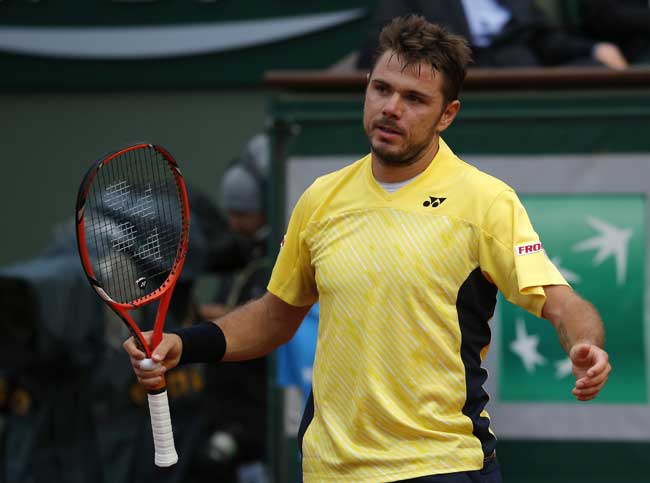
In tennis the post match statistics typically include a line item for unforced errors. A few years ago Roger Federer made an impression on me when listening to his post match interview during the press conference at the 2007 French Open. “They don’t know an unforced error from a croissant,”as he was referring to the statisticians. He has just lost a match to Raphael Nadal. The interviewer asked ‘So do you think your 59 unforced errors contributed to your loss today?’ Federer quickly questioned ’59 unforced errors!?’ You try hitting back his spin and then tell me if they were unforced. (For the record, Federer had 59 “unforced errors” to Nadal’s 27.

It got me thinking and my thoughts were crystallized last week when I spent time in Arizona at Tennis Congress and heard Craig O’Shannessy speak. I questioned the subject more.

Is there a difference between forced errors and unforced errors? Are they all forced errors or are they all just errors?

What I realized is that it’s just a judgment call by the statisticians. Errors in the sport of baseball are handled the same way. Who’s to say a ball hit very wide to Djokovic, Monfils and Kerber is indeed “unforced”? They typically are better on the move barely reaching balls so those misses to others would be winners but to them should be unforced? Those balls they normally make. Likewise who’s to say that a very low volley for John Isner is unforced or not? To a shorter player that’s more likely unforced.

And hitting heavy spin to someone’s body, just because it was reachable doesn’t mean it was make-able?

At the end of the day they are all just errors and in your mind should be classified as such. On the sending end of an error your mindset should be to just get one more shot back in play and anything could happen. Your opponent’s shot tolerance could be 8 and that was the 9th shot or your opponent could be cramping and one more shot back would do the trick.

Muhammad Ali and Joe Frazier had an epic boxing match known as “The Thrilla in Manila.” Before the 15th and final round Frazier’s ring threw in the towel. Unbeknown to him, Ali was a wit’s end and may have thrown in the towel himself. There is a debate as to whether or not Ali would have been able to finish the final round. Ali ended up getting up to start the final round but his opponent ended up throwing in the towel!

Sometimes it’s easier to get your opponent to quit than it is to win.

Errors result from dips in mental focus, tenacity, physical endurance, technique, tactics, concentration and the will to win.

On the giver’s end of an error (i.e. you made the error) your mindset should be that all errors are within your control. Question your shot selection, focus, concentration and heart. What do you need to do differently than what you just did? On the reciever’s end of an error (i.e. you were given a gift) your mindset should be that maybe it wasn’t an “easy” shot and maybe your opponent is mentally or physically fatigued or perhaps doesn’t like a soft, high or “easy” shot.

Force your opponent into errors by simply making one more shot because most often that’s all you’ll need.

I always welcome feedback at angeloarossetti @ gmail .com.

You can learn more about a couple of tennis GUINNESS WORLD RECORDS™ that I have been a part of:

FOX News Story
Inspirational Tennis Story: Tennis Begins with Love
If you found this article of value please consider making a donation to Save the Children. Otherwise, please share this article so that we can educate, inform and inspire others.
Make a Donation

If you are interested in my new book TENNACITY: The Tenacious Mindset On & Off the Court, please complete the form below.
Go back

Your message has been sent

Warning
Warning

Warning.

Do “unforced errors” exist?

Emotional Intelligence

williams-serena-082315-getty-ftrjpg_1mj5s0f873yl10y5as3slizy9
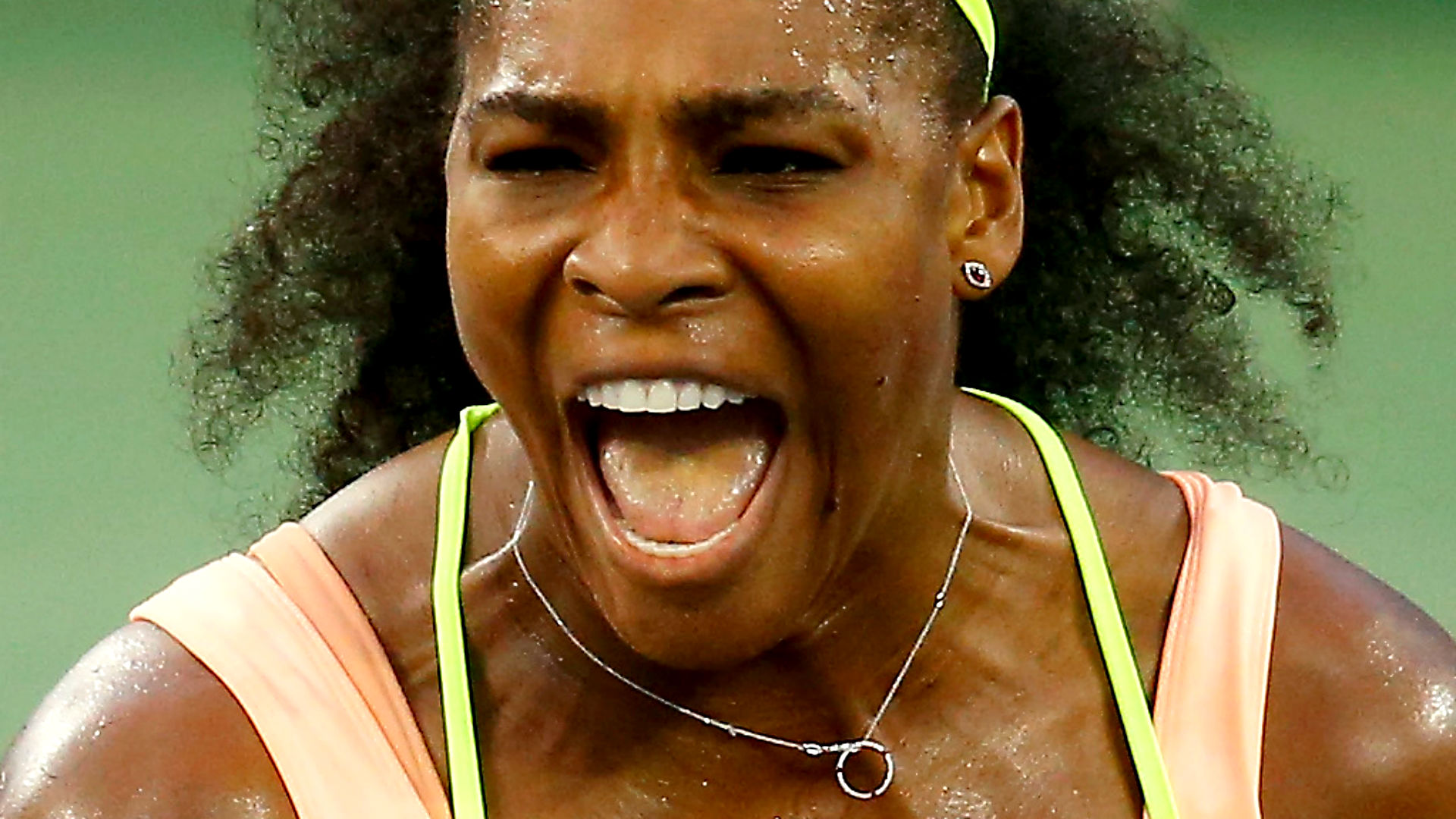
Serena Williams showing emotion (c) Getty Images

by Angelo A. Rossetti, USPTA Elite/PTR Professional, USTA HP & Mental Skills Certified & 2x Guinness World Records™ holder 

Emotions typically cloud judgement. There is a time and place for emotion in athletics. Typically before or after competition but not during it. Since it is not possible for you to experience an emotion and have a thought simultaneously, choose your thoughts wisely. In a match, if you are nearing the end, you have to focus on the present. If you focus on the future that can cloud your judgement.
 
There is an example where an Olympic snow boarder was in first place and started to celebrate by show boating on the last easy jump and fell. She finished second to her demise although she should have won gold. Her future thoughts created emotions that clouded her judgement, which led to her failing to complete the last jump and win first place.
 
There is a discussion of athletes developing “emotional intelligence.” What does that mean? Simply stated it means that you are able to control your emotions or remove them from the moment so that you can think clearly about your tactics and strategies.
 
Implementing your game plan takes logic and emotional control (i.e. emotional intelligence). I’m not saying that you shouldn’t compete with emotions or heart but there is a time and a place. Knowing when you should allow your emotions to show or put them on hold so you can think clearly marks a true champion, someone who posses emotional intelligence. In tennis if you celebrate too much on your small victories you may berate yourself when you make mistakes. What goes up must come down. If you try to keep your emotions in check, both positive and negative, like Roger Federer does so well, then your outcome will be closer to what you want it to be. If you keep your emotions in check and use them only when you need them, then you will experience a better result.
 
I’ve used emotions to come back from big deficits because I needed more than just my game plan and I’ve also kept emotions away when I was about to close out a big match because I knew that if I got too emotional or thought too much about the future I won’t be able to execute in the present.
 
Remember that there’s not just intelligence in competition but emotional intelligence. Separate your emotions from your thoughts and you will become a better athlete.
 

I always welcome feedback at angeloarossetti @ gmail .com.

You can learn more about a couple of tennis GUINNESS WORLD RECORDS™ that I have been a part of:

Our Inspiration – 2 World Records 2 Minute Video
FOX News Story
Inspirational Tennis Story: Tennis Begins with Love
If you found this article of value please consider making a donation to Save the Children. Otherwise, please share this article so that we can educate, inform and inspire others.
Make a Donation

If you are interested in my new book TENNACITY: The Tenacious Mindset On & Off the Court, please complete the form below.
Go back

Your message has been sent

Warning
Warning

Warning.

Emotional Intelligence

Situational Errors

murraysolympics=blogby Angelo A. Rossetti, USPTA Elite/PTR Professional, USTA HP & Mental Skills Certified & 2x Guinness World Records™ holder 

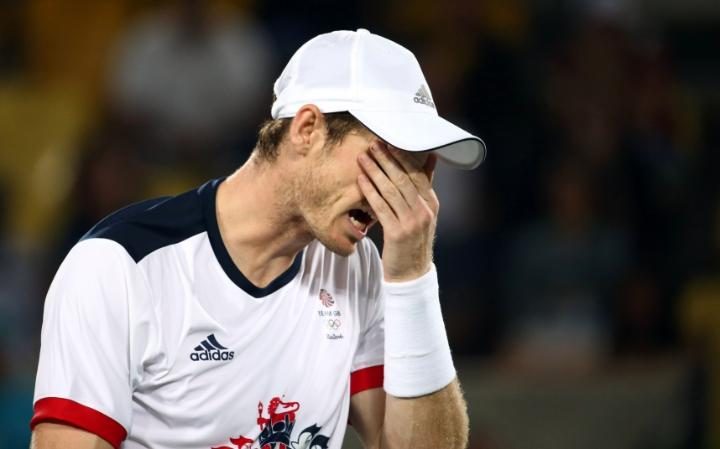
4 all first set Murray serving in the gold medal match of the 2016 Olympics. Double fault. I’ve always said that double faults aren’t all created equal just like errors in any sport aren’t all created equal.

It appeared as though Andy Murray had a situational double fault. He missed his first serve well long and hit an extremely slow middle of the box serve into the middle of the net.

It was an unproductive DF (double fault) rather than a productive one.

It seemed to have been hit without much purpose besides “just get it in” or even worse “don’t double fault”. Don’t get me wrong, Murray ended up pulling out the gold medal win and got past some situational mistakes.

It happens to some of the best athletes in any sport. Shots that you can make “in your sleep”, that you make day in and day out in practice, somehow leave you when you need them most.

Usually over-thinking the score or letting your mind wander to the future or to the past causes these hiccups.

In golf they call them the yipps. Shots that are so bad or misses that are so poor that it takes a special skill to pull them off.

I’ve seen servers in tennis miss so badly that the ball actually bounces before hitting the net or hitting the backstop on the fly.

Emotion vs Logic. Head vs Heart.

What happens on big points or in big situations is that the player starts to think about the gravity of the situation. If you find yourself in an Olympic final on the verge of back to back golds, your mind could want to thoughts like ‘I’m close to closing out this set. If I do and end up winning this match I may end up doing what no one else has in the history of the Olympics.’

Thoughts like these can be helpful to get you fired up prior to the final, serve the purpose of getting your attention and getting you prioritizing extra practice but during a match typically cause negative energy. More productive thoughts aren’t situational at all. ‘This is just another serve. You’ve done this a thousand times. Success is following through.’

The more you remove your emotions and appeal to logic the better chance you will have to avoid situational errors. I’ve coached players who have difficulty closing out games, sets or matches. One way to approach this challenge is to pretend that you are two points away. Almost forget the score. Then when you arrive at match point you would have already won.

The concept of using your head and not your heart, using your thoughts not your emotions need practice to make permanent just like a solid forehand.

I always welcome feedback at angeloarossetti @ gmail .com.

You can learn more about a couple of tennis GUINNESS WORLD RECORDS™ that I have been a part of:

FOX News Story
Inspirational Tennis Story: Tennis Begins with Love
If you found this article of value please consider making a donation to Save the Children. Otherwise, please share this article so that we can educate, inform and inspire others.
Make a Donation

If you are interested in my new book TENNACITY: The Tenacious Mindset On & Off the Court, please complete the form below.
Go back

Your message has been sent

Warning
Warning

Warning.

Situational Errors

To Think or Not to Think

1464969766969_lc_galleryImage_PARIS_FRANCE_JUNE_03_Andy
by
 Angelo A. Rossetti, USPTA Elite/PTR Professional, USTA HP & Mental Skills Certified & 2x Guinness World Records™ holder 

Sports are based on mental fortitude. Top athletes can focus at the right times and will themselves to play their based at the most critical moments.

In tennis, many coaches say that the mental game isn’t taught or practiced enough. Let’s start with the premise that the mind game is important. How important it is in relationship to the physical game is debatable but one thing for sure is that it is critical to an athlete’s success.

What to think and when to think are key elements. Being positive and reassuring to yourself is important for confidence but when are you supposed to think?

Don’t think just do. Even NIKE’s slogan Just Do It implies not thinking but just going out and doing it. At some point planning has to end and execution must begin. In tennis, players need to perform their primary thinking and strategy between points but not during them. During the point players should just let it happen and play freely, play the way you know. Do what you do best.

Thinking about technique should be done in private lessons and clinics but not in competition. Once you iron out your strokes then you can use them in competition comfortably and without much thought.

Here is how you can look at it.

Match hasn’t started, think. Match begins, don’t think just do. Point ends, think again. Next point begins, just do. And so on.

So now that you know when to think, what are some of the things you should be thinking? After losing a point at the net you may think “this is the third time he passed me when I approached to his backhand. Either stay at the baseline or approach to his forehand. ”

You don’t want to be thinking “I just need to refine my movement on my approach shot. Perhaps I should try the hit and hop that I just learned.”

Keep thoughts primarily on strategy and away from technique.

The one shot in tennis you have complete control over is your serve. Your serve isn’t affected by your opponents last shot as every other shot in the game is. Novak Djokovic knows this well as he was stunned by Sam Querrey of the US in the 3rd round at Wimbledon in 2016. The world #1 and defending Wimbledon champion Djokovic said “Part of his game was brutal today, he made a lot of free points with his first serve. He overpowered me.”

Think before you serve then just let it happen. Andy Murray ended up winning Wimbledon in 2016 in straight sets. His first serve points won for the tournament was 78% and increased to 86% in the finals.

I’m willing to guess that in both Sam and Andy’s cases they were thinking at the right times and not thinking at the right times.

When you think can be just as important as what you think.

I always welcome feedback at angeloarossetti @ gmail .com.

You can learn more about a couple of tennis GUINNESS WORLD RECORDS™ that I have been a part of:

FOX News Story
Inspirational Tennis Story: Tennis Begins with Love
If you found this article of value please consider making a donation to Save the Children. Otherwise, please share this article so that we can educate, inform and inspire others.
Make a Donation

If you are interested in my new book TENNACITY: The Tenacious Mindset On & Off the Court, please complete the form below.

Go back

Your message has been sent

Warning
Warning

Warning.

To Think or Not to Think

PMA – Positive Mental Attitude

DSCF1626by Angelo A. Rossetti, USPTA Elite/PTR Professional, USTA HP & Mental Skills Certified & 2x Guinness World Records™ holder 
What you think about yourself is so important in athletics. Zig Ziglar once said “Your attitude, not your aptitude, will determine your altitude.” How we frame negative situations is key to high- level performance in tennis. There are always situations that are challenging. It’s not the challenges that present themselves that defines us but how we handle those challenges. Expect controversy. Expect cheating. Expect a long match. Expect some unexpected bounces. Expect let cords. Expect your best shot back. Expect the unexpected. If you set your expectations correctly then you will be surprised much less. If you expect then you can accept. Acceptance is the key to performing well under pressure and stress.There are always two sides to every coin. What goes up must come down. There is not good without evil. It’s how you handle life’s downs that creates someone’s character, not the fact that they have been lucky enough not to have any downs. Luck isn’t a strategy. If you keep moving forward in a positive manner, expecting the negatives, re-formatting the negatives into positives, you will achieve more success on the court. 


“No one can make you feel inferior without your consent.” ~Eleanor Roosevelt

Your mind is much more powerful than you think it is. Studies show that we only tap into a small percent of our mental potential. Use it as often and as positively as you can to steer you in the right direction. Left unmonitored, your mind can take you into dark, negative places. That’s why after traumatic events there are therapy dogs and doctors to help with the stress. They help you stay positive and put things into perspective. Keeping perspective in a tennis match is key to managing your mind and emotions. Putting too much weight to any one match will put too much pressure, however putting too little may have you not take things seriously enough. The balance of importance is what is key. If you have the right balance then you are more likely to be confident, and confidence helps with your PMA (positive mental attitude).

Ultimately tennis is just a game and any game should be fun. If you are able to put this in perspective it’s a lot easier to remain positive, knowing that win or lose you enjoyed the process.


I always welcome feedback at angeloarossetti @ gmail .com.

You can learn more about a couple of tennis GUINNESS WORLD RECORDS™ that I have been a part of:

FOX News Story
Inspirational Tennis Story: Tennis Begins with Love
If you found this article of value please consider making a donation to Save the Children. Otherwise, please share this article so that we can educate, inform and inspire others.
Make a Donation

If you are interested in my new book TENNACITY: The Tenacious Mindset On & Off the Court, please complete the form below.

Go back

Your message has been sent

Warning
Warning

Warning.

google-site-verification: google43e4b9f09f62804e.html

PMA – Positive Mental Attitude

Be Happy But Not Satisfied – The Importance of Intent

Nadal-tennisdotcom
Photo: AP via tennis.com

by Angelo A. Rossetti, USPTA Elite/PTR Professional, USTA HP & Mental Skills Certified & 2x Guinness World Records™ holder 

Unfortunately most competitive athletes focus too much on the result and not enough on the process. The intent behind the result is more important than the result itself. In tennis, if you go for an unnecessary, low percentage shot when it’s not called for and it clips the net and barely trickles over for a winner should you be satisfied? Under these circumstances I’d be “happy but not satisfied.” Be happy that you won the point but not satisfied with your intent since it wasn’t a high percentage play.

Satisfaction would be derived from attaining the desired result while also having the correct intent. In soccer if you have the ball and juke the goalie so badly that he ends up falling to the ground leaving an open net and you blast an upper corner shot that hits the inside of the post and goes in, you should thank your blessings. All you needed to do was tap the ball into the open net at a safe distance away from the net post. You should definitely NOT be satisfied with that outcome, although you can be thankful or happy.

Intent is so important in competitive sports because it is an indicator of having the right tactics and strategies. You cannot directly control the outcome but you can control your intent. By having the right intent, hitting the right shot at the right time, you will eventually achieve increasingly positive outcomes. Having the wrong intent isn’t sustainable but sometimes athletes achieve the result that they want not realizing that they were lucky or got away with one.

In tennis, the four primary variables that a player can control are speed, direction, spin and height. Your fixed obstacles are the net and out of bounds lines and your variable obstacle is your opponent. If you have your opponent out of position then you only need to hit the ball fast enough to close out the point but NO FASTER and far away from your opponent enough to close out the point but NO FARTHER! If you are over hitting then you are either playing with emotion or ego, both of which are recipes for disaster. Humans are unable to think clearly and have emotions at the same time. When you become angry or emotional on the tennis court then you think less logically, which makes you stray away from your “intent” or game plan. Playing with ego can be disastrous as well because you are looking to “make a statement” when you just have to win the point.

When you are planning your intent for the fixed obstacles then spin and net clearance become more important. Barely clearing the net or consistently hitting the lines aren’t typically examples of sustainable strategies. I often say that if you have to hit the lines to win then you are either very lucky or playing someone much better than you (because there is so little margin to win a point).

Remembering when to be happy versus when to be satisfied will help keep your intent in check.

I always welcome feedback at angeloarossetti @ gmail .com.

You can learn more about a couple of tennis GUINNESS WORLD RECORDS™ that I have been a part of:

FOX News Story
Inspirational Tennis Story: Tennis Begins with Love
If you found this article of value please consider making a donation to Save the Children. Otherwise, please share this article so that we can educate, inform and inspire others.
Make a Donation


If you are interested in my new book TENNACITY: The Tenacious Mindset On & Off the Court, please complete the form below.

Go back

Your message has been sent

Warning
Warning

Warning.

google-site-verification: google43e4b9f09f62804e.html

Be Happy But Not Satisfied – The Importance of Intent